Regenerative Medicine
6 min read
By BioBuilt Editorial

Regenerative Medicine
6 min read
By BioBuilt Editorial
The human body possesses an extraordinary ability to repair itself. Following injury, a coordinated sequence of biological events begins almost immediately: blood vessels constrict to limit bleeding, immune cells clear damaged tissue and prevent infection, and specialized cells rebuild the injured area. This regenerative capacity is essential for survival, allowing humans to recover from countless injuries throughout life. Yet despite this remarkable ability, human repair has a clear limitation. While skin can close, bones can reconnect, and even fingertips can sometimes regenerate, a lost limb cannot be replaced.
This contrast has made regeneration one of the most fundamental unanswered questions in biomedical engineering. The challenge is not simply whether scientists can grow new cells. Researchers can already generate many cell types in the laboratory, create artificial tissues, and design biomaterials that support repair. The far more difficult problem is understanding how living systems organize those cells into complex structures. A regenerating limb requires thousands of biological decisions to occur simultaneously: where bone should form, how muscles should connect, where blood vessels should grow, and how nerves should reconnect with the correct targets. Regeneration is therefore not merely a problem of producing tissue, but a problem of understanding and engineering the instructions that tell tissue what to become.
Modern medicine has become highly effective at promoting healing, but healing and regeneration represent fundamentally different biological strategies. When human tissue is damaged, the body prioritizes rapid stabilization. The immune system responds to remove debris and pathogens, while fibroblast cells deposit collagen and extracellular matrix proteins that strengthen the injured area. This process produces scar tissue, which quickly restores structural integrity and protects the body from further damage. However, scar tissue is a compromise: it closes wounds effectively but rarely restores the original organization or function of the tissue.
Regeneration requires a fundamentally different response. Instead of replacing damaged areas with a biological patch, regenerative organisms recreate the original architecture of the lost tissue. New cells must acquire specialized identities, organize into precise structures, and stop growing at the appropriate time. This distinction explains why regeneration is so difficult to engineer. The goal is not just to accelerate healing, but to shift the body's response from repair toward reconstruction, a process that requires controlling the complex interactions between cells, molecules, mechanical forces, and biological signals.
Although humans have limited regenerative abilities, many organisms have evolved sophisticated systems for rebuilding damaged structures. Salamanders can regenerate entire limbs containing bone, muscle, blood vessels, nerves, and skin. Zebrafish can replace large portions of damaged heart tissue, while other species can restore parts of their nervous systems after injury. These examples demonstrate that complex regeneration is not biologically impossible; rather, humans appear to have lost or restricted access to many of the mechanisms that enable it.
For decades, scientists believed that regenerative organisms possessed unique populations of stem cells that allowed them to rebuild lost structures. However, research has revealed a more dynamic process. Following limb amputation in salamanders, mature cells near the injury site can undergo dedifferentiation, partially reversing their specialized identities and returning to a more flexible developmental state. These cells gather into a structure called the blastema, a temporary regenerative environment where cells receive instructions about what tissues to form and where those tissues should develop. This discovery shifted the focus of regenerative medicine away from simply finding specialized regenerative cells and toward recreating the biological environment that allows cells to rebuild.
The formation of a regenerating limb requires an extraordinary level of coordination. During embryonic development, cells receive complex instructions that determine their location, identity, and function. Regeneration appears to reactivate some of these developmental programs after injury, but scientists are still working to understand exactly how these signals are controlled. A developing limb must know not only which cells to produce, but also how those cells should interact with one another to create a functional structure.
This challenge has transformed regeneration into an engineering problem of information management. Researchers are increasingly studying how chemical signals, physical forces, electrical activity, and cellular interactions work together to guide tissue formation. No single factor determines whether regeneration succeeds. Instead, regeneration emerges from the precise coordination of many biological systems operating together. The future of regenerative engineering may therefore depend less on discovering a single “regeneration molecule” and more on designing technologies capable of recreating the complete environment in which regeneration naturally occurs.

One of the most important discoveries in regenerative biology has been the changing understanding of the immune system. Historically, immune cells were viewed primarily as responders to injury: they eliminated pathogens, removed damaged tissue, and initiated repair. Increasingly, however, researchers have discovered that immune cells actively influence the outcome of healing. The inflammatory signals produced after injury can determine whether tissue enters a regenerative state or transitions toward fibrosis and permanent scar formation.
This insight has created new opportunities for biomedical engineering. Rather than simply delivering replacement cells to damaged tissues, researchers are developing biomaterials and therapies that regulate immune responses and create environments more favorable for regeneration. By controlling inflammation, engineers may be able to prevent the biological processes that lead to scarring and instead encourage the cellular behaviors required for tissue reconstruction. In this way, the immune system is no longer viewed as a barrier to regeneration, but as one of the most important systems that engineers must learn to guide.
Regeneration also depends on communication between tissues. Studies in salamanders have shown that nerves play a crucial role in limb regeneration; when nerve connections are removed, regeneration often fails. This finding revealed that nerves are not simply electrical cables that transmit information between the brain and the body. They also release molecular signals that influence nearby cells and help maintain the regenerative environment.
For biomedical engineers, this discovery has expanded the definition of tissue repair. Rebuilding a limb requires more than generating muscle, bone, and skin separately. It requires restoring the communication networks that coordinate those tissues. Researchers are now exploring approaches such as nerve-guiding biomaterials, electrical stimulation, and engineered signaling systems that could encourage damaged tissues to reconnect. The challenge is not only creating new structures, but restoring the biological conversations that allow those structures to function together.
Perhaps one of the most unexpected developments in regenerative biology has been the discovery that cells communicate not only through chemical signals but also through electrical patterns. Every cell maintains differences in electrical charge across its membrane, and these bioelectric states influence how cells grow, migrate, and organize during development. Although genetics has traditionally been viewed as the primary source of biological instructions, researchers increasingly recognize that electrical signals provide another layer of information that helps determine tissue structure.
Studies manipulating bioelectric patterns have demonstrated that altering these signals can influence regeneration and development in animal models. These findings suggest that the body's blueprint is not stored exclusively within DNA but also emerges from dynamic interactions between cells. For regenerative engineers, this creates an entirely new possibility: instead of manually constructing every component of a tissue, future technologies may be able to restore the signaling networks that allow the body to organize and rebuild itself.
Early approaches to tissue engineering focused largely on replacement. Scientists attempted to create artificial scaffolds that could provide structural support while transplanted cells generated new tissue. While this approach has produced important advances, modern regenerative engineering has increasingly moved toward a different philosophy: designing materials that actively communicate with biology.
Today’s biomaterials are being engineered as instructive environments rather than passive supports. They can release growth factors at controlled rates, guide blood vessel formation, influence immune activity, and provide mechanical signals that affect cellular behavior. Instead of attempting to build tissues independently from the body, these technologies aim to work with the body's existing repair mechanisms. The scaffold is no longer viewed as a replacement structure; it is becoming a tool for directing the biological processes that allow regeneration to occur.
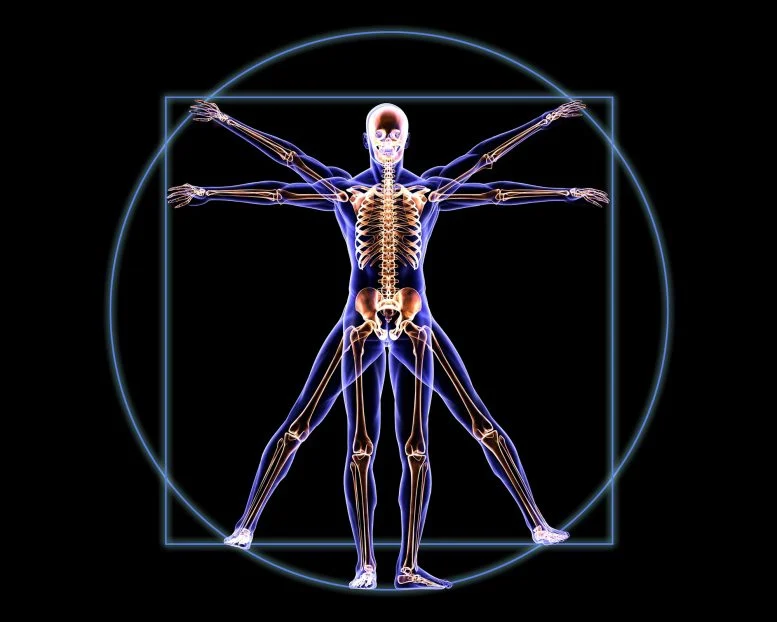
The difficulty of human limb regeneration does not come from the absence of any single biological component. Humans possess stem cells, developmental pathways, immune systems, and electrical signaling networks that contribute to regeneration in other organisms. The challenge is coordinating these systems simultaneously. A functional limb requires precise integration between dozens of biological processes, including cell differentiation, tissue patterning, vascular growth, nerve connection, immune regulation, and mechanical organization.
This complexity explains why limb regeneration remains one of the greatest challenges in biomedical engineering. Unlike many medical technologies that replace a damaged function with an external device, regeneration requires engineers to work with the body's own biological systems and guide them toward a desired outcome. The problem, here, is recreating the information network that tells living systems how to organize that tissue into a complete, functional structure.
The future of regenerative medicine will likely not be defined by a single breakthrough technology that allows humans to grow replacement limbs overnight. Instead, progress will come from combining multiple fields, involving stem-cell biology, biomaterials engineering, immunology, biomechanics, genetics, and bioelectricity, to recreate the conditions that naturally enable regeneration.
The ultimate goal of regenerative engineering is not simply to manufacture tissues, but to understand the principles that allow living organisms to build themselves. By decoding the signals that control growth, organization, and repair, researchers hope to transform medicine from a field focused primarily on replacing damaged structures into one capable of restoring the body's own regenerative abilities.
Nature has already demonstrated that complex regeneration is possible. The challenge for biomedical engineers is learning the language that makes it happen and developing the tools to speak it ourselves.
Gurtner, G. C., Werner, S., Barrandon, Y., & Longaker, M. T. (2008). Wound repair and regeneration. Nature, 453, 314–321. https://doi.org/10.1038/nature07039
Stocum, D. L. (2006). Regeneration in vertebrates: Cellular and molecular mechanisms. Annual Review of Cell and Developmental Biology, 22, 525–549. https://doi.org/10.1146/annurev.cellbio.22.010305.104348
Gerber, T., Murawala, P., Knapp, D., Masselink, W., Schuez, M., Hermann, S., Gac-Santel, M., Nowoshilow, S., Kageyama, J., Khattak, S., Currie, J. D., Camp, J. G., Tanaka, E. M., & Treutlein, B. (2018). Single-cell analysis uncovers convergence of cell identities during axolotl limb regeneration. Science, 362(6413), eaaq0681. https://doi.org/10.1126/science.aaq0681
Godwin, J. W., Pinto, A. R., & Rosenthal, N. A. (2013). Macrophages are required for adult salamander limb regeneration. Proceedings of the National Academy of Sciences, 110(23), 9415–9420. https://doi.org/10.1073/pnas.1300290110
Kumar, A., Godwin, J. W., Gates, P. B., Garza-Garcia, A. A., & Brockes, J. P. (2007). Molecular basis for the nerve dependence of limb regeneration in an adult vertebrate. Science, 318(5851), 772–777. https://doi.org/10.1126/science.1149490
Levin, M. (2021). Bioelectric signaling: Reprogrammable circuits underlying embryogenesis, regeneration, and cancer. Cell, 184(8), 1971–1989. https://doi.org/10.1016/j.cell.2021.02.034
Levin, M. (2007). Bioelectric mechanisms of regeneration: Unique aspects and future perspectives. Seminars in Cell & Developmental Biology, 18(6), 858–866. https://doi.org/10.1016/j.semcdb.2007.08.004
Langer, R., & Vacanti, J. P. (1993). Tissue engineering. Science, 260(5110), 920–926. https://doi.org/10.1126/science.8493529
Place, E. S., Evans, N. D., & Stevens, M. M. (2009). Complexity in biomaterials for tissue engineering. Nature Materials, 8, 457–470. https://doi.org/10.1038/nmat2447
Murphy, S. V., & Atala, A. (2014). 3D bioprinting of tissues and organs. Nature Biotechnology, 32, 773–785. https://doi.org/10.1038/nbt.2958
Badylak, S. F., Weiss, D. J., Caplan, A., & Macchiarini, P. (2012). Engineered whole organs and complex tissues. The Lancet, 379(9819), 943–952. https://doi.org/10.1016/S0140-6736(12)60271-0
Seifert, A. W., & Voss, S. R. (2013). Revisiting the relationship between regeneration and development in salamanders. Developmental Dynamics, 242(5), 489–500. https://doi.org/10.1002/dvdy.23955
monthly newsletter
Get one monthly simplified summary of the healthcare headlines, research findings, and biotech developments worth understanding.